Manual drilling, bringing safe water closer to communities
Reaching the communities often left behind
Village Water’s work transforms daily life. But providing safe water in rural communities is not always straightforward.
Some communities are located far from main roads, making it difficult and expensive to transport heavy drilling equipment. In these places, a different approach can help: manual drilling.
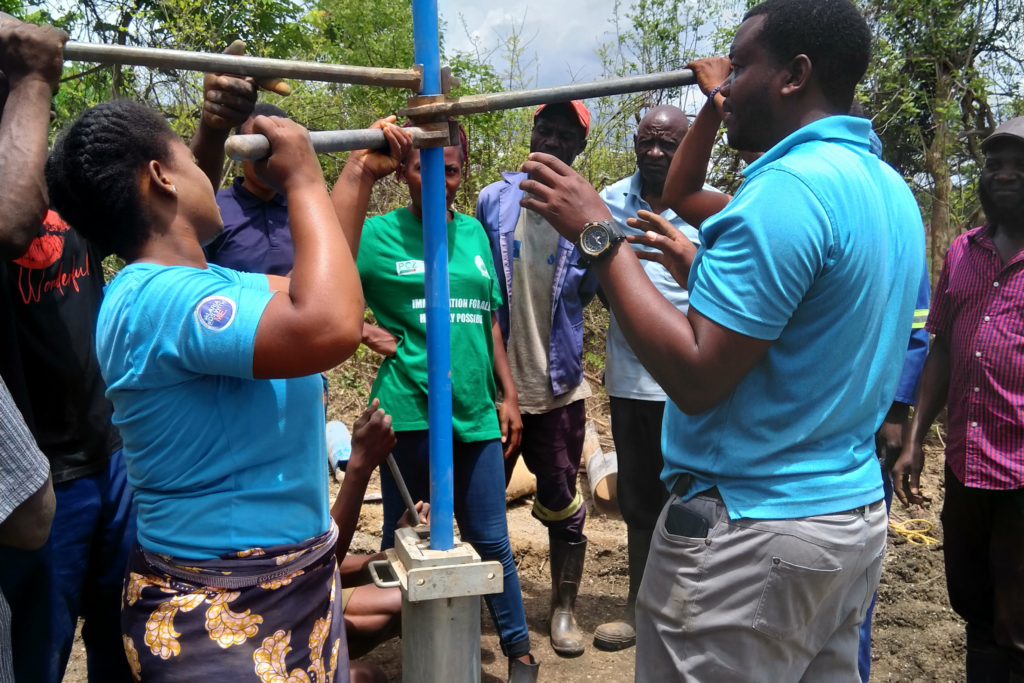
Manual drilling is a low-cost way of constructing a water well using lightweight, human-powered equipment rather than large drilling rigs. It is most effective in areas where groundwater is relatively close to the surface, and the ground is made up of softer soils such as sand and gravel.
At first glance, manual drilling may seem like a simple technology. But it has the potential to bring safe water closer to communities that might otherwise be difficult to reach.
How manual drilling works
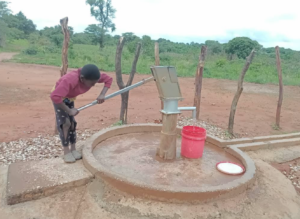
The process starts by identifying a suitable location where groundwater is likely to be found. A borehole is then drilled using techniques suited to the local ground conditions. Once water is reached, a pipe and screen are installed, the borehole is cleaned and tested, and a pump is fitted so community members can access water safely and reliably.
Because the equipment is lightweight and easy to transport, the overall cost can be significantly lower than conventional machine drilling, allowing more communities to benefit.
Celebrating those making change possible
This year’s World Water Week theme is Water for People and Progress.
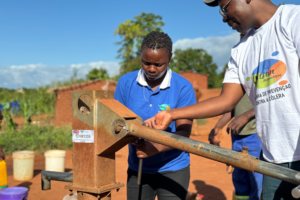
Every borehole drilled, every pump repaired and every water point maintained is the result of people working together. Community members, local authorities, mechanics, masons and Area Pump Minders all play a part in keeping services running.
From 23rd – 27th August we’re celebrating their contribution and sharing more about the work that helps bring safe water closer to communities across Zambia and Mozambique.
Your support can help communities access safe water, equip local teams with the skills they need, and ensure water services continue long after installation. www.villagewater.org/donate